Selective Schools Tests for year 7 entry in NSW is a highly competitive exam that challenges the academic abilities of students. The test aims to identify the most exceptional students among the brightest ones.
As of now, there are 17 full and 27 partial selective schools in NSW. There are also 4 full selective agricultural schools in NSW as reported in www.education.nsw.gov.au. These schools provide a high-quality education and are highly sought after by students and parents alike.
As of now NSW Department of Education offers 4248 spots for year 7 entry in selective high schools. Each year, around 16000 students take part in the Selective Schools Tests for year 7 in NSW. This indicates that on average, there are about 4 students competing for each available seat in year 7. However, the competition is even more intense for high-achieving students who aspire to attend the most prestigious schools.
For instance, Baulkham Hills High School, James Ruse Agricultural High School, North Sydney Boys High School, Sydney Boys High School, and Sydney Girls High School are top-ranked schools in NSW. These schools have a total of 780 available seats. That means the competition ratio goes up to about 1 to 20 for these schools. This is incredibly challenging even for the most gifted and talented students.
Therefore, it is crucial for students to prepare thoroughly, consistently, and thoughtfully for the NSW Selective Schools Tests.
The test assesses students’ abilities in reading, mathematics, thinking skills and writing. Successful students can look forward to a challenging and rewarding academic journey in one of the best schools in NSW.
The NSW Selective School Tests is typically administered in the first few months of year 6. So it is important to start preparation for the test right from the start of year 5. It is important for students and their guiding parent/guardian to understand the test structure before delving into the preparation details. The NSW Department of Education website contains all the necessary information about the test, including its structure and additional details. For more information visit www.education.nsw.gov.au. We are going to examine that information with a meticulous approach, connecting it to our preparations.
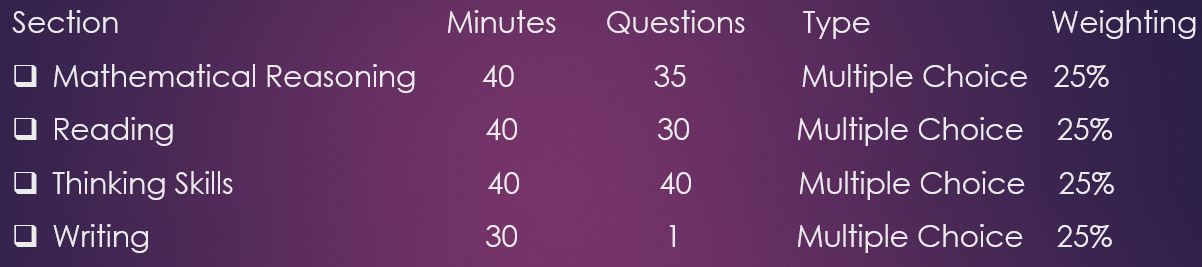
The NSW Selective Schools Tests comprises of four sections: Reading, Mathematical Reasoning, Thinking Skills, and Writing. The following is the test structure as of now:

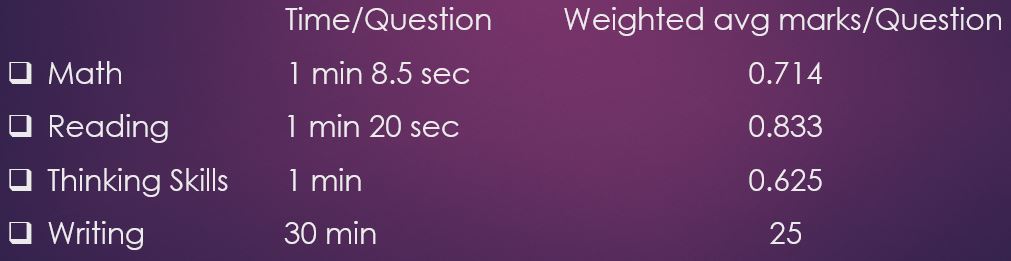
Based on the given information, we can determine the time needed and weighted scores for each question as shown below:

On average, Thinking Skills questions require answering at a rate of 0.625 marks per minute, while for Reading, it’s 0.833 marks per minute and 20 seconds. This implies that on average the maximum time provided to respond 10 Thinking Skills questions is 10 minutes while for 10 Reading questions is 13 min and 20 secs precisely and for 10 math questions 11 min 25 seconds. In order to guarantee success in the examination, it is crucial for both the student and their parent or guardian to comprehend this from the onset of their preparation. This will provide individuals with the means to evaluate their knowledge and competence as they study and make progress towards the exam.
To succeed in any endeavour, having a clear objective is of utmost necessary. The objective of the Selective Schools Tests preparation is to get as high marks as possible to get a position in the desired NSW Selective High School. Therefore, the preparation and study need to be done in a planned and organised way to fulfil the requirement. Mere studying or practising will only burden and stress a young mind without a clear destination.
In order for students to be well-prepared for a test, it is crucial that they gain a thorough understanding of the subjects they need to study, the specific topics within those subjects, the level of knowledge required for each topic, and the level of difficulty of the questions that they can expect to see on the test. All these aspects should be considered as part of the journey towards the ultimate goal of performing well on the test. From our many years of experience, we know that success requires effort and cannot be achieved overnight. Thus preparation needs to be progressed and reviewed on a regular basis.
Years 5 and 6 are part of Stage 3 in New South Wales. The Selective Schools Tests in NSW is taken in Year 6. However, the test is designed to challenge gifted and talented students, so the questions can be very complex and difficult. Since there is no specific syllabus given about the content of the test, the basis of the study should be the Stage 3 curriculum and the past NSW Selective High School Placement Test papers since 2021 and the sample test provided in the NSW Department of Education website www.education.nsw.gov.au. These test resources are also made available in the link here on the NeoTeriC Academy website https://neotericacademy.com.au/resources/.
Our article on preparing for the NSW Selective Schools Tests, ‘How to Prepare for the NSW Selective Test?’, provides detailed guidance.
Selective Test in NSW is a very challenging test as we already know. In my article ‘Insights of Selective Schools Tests’ I mentioned that the curriculum and the past exam papers should be the starting point. In this article, I will discuss the details of preparation.
Before discussing preparation specifics, it’s important to note that with proper study and practice, most students can achieve their desired results. If there is any doubt, I would suggest watching the movie ‘Gifted Hands’, which is based on the autobiography of neurosurgeon Ben Carson.
The Selective Test has four sections:
I’ll discuss the preparation of Mathematical Reasoning here.
To adequately prepare for the Selective Test, it is advisable to review the mathematics topics included in the stage 3 curriculum and the past exam papers.
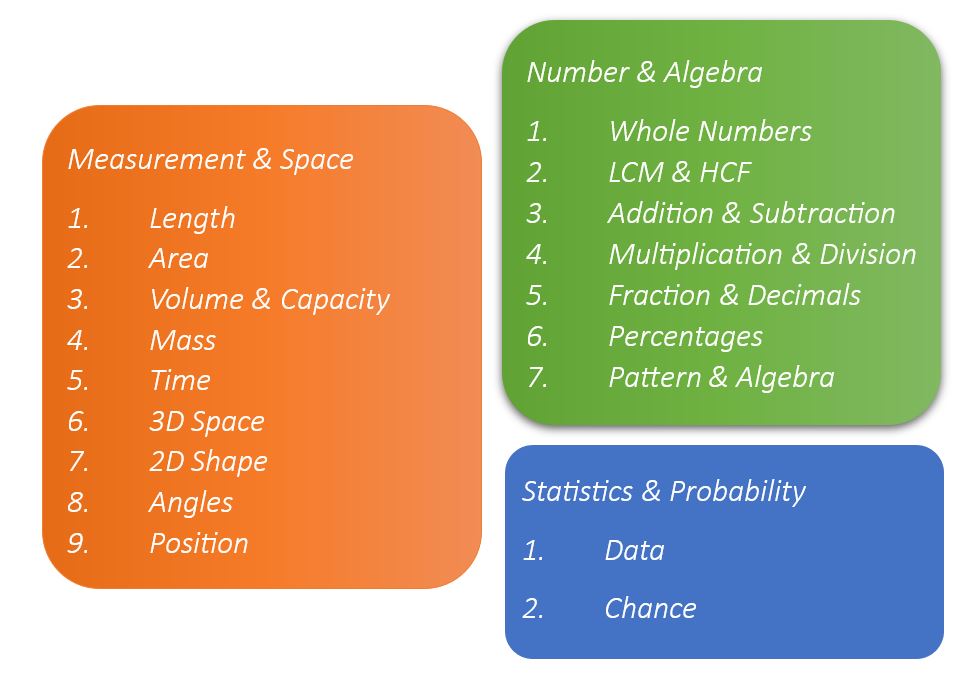
For stage 3 math, there are 18 different topics grouped into 3 major areas.

To adequately prepare for the Selective Test, students must gain knowledge in two distinct dimensions of each topic:
The curriculum provided by the NSW Department of Education comprehensively addresses fundamental aspects at the stage 3 level. Students must have a full understanding and should be capable of doing any maths of these aspects.
The mathematics questions featured in the previous Selective Test since 2021, as well as the sample test available at www.education.nsw.gov.au, exhibit both creative and advanced characteristics.
Fundamental aspects are the attributes that involve a particular topic or operation. In most cases, fundamental maths involves single-step calculation.
Creative and advanced mathematics involve multiple steps and topics in combination.
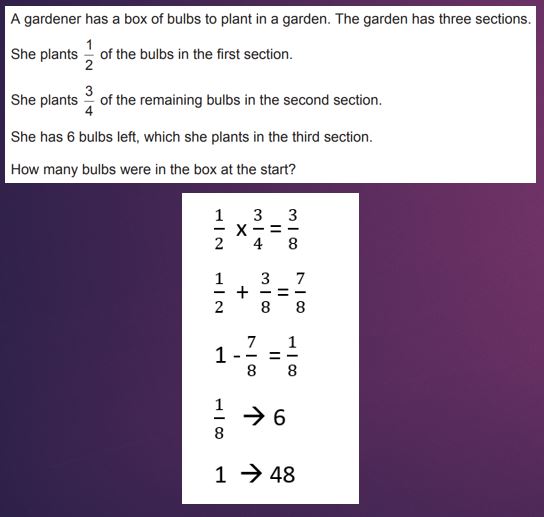
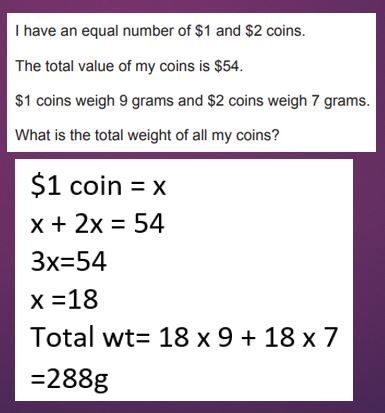
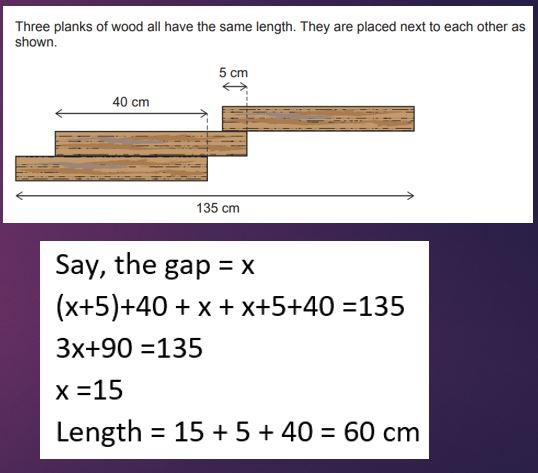
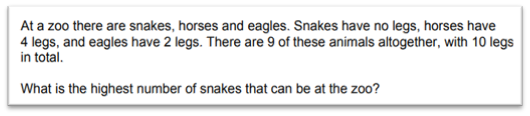
The image displays three mathematical questions that were featured in the 2022 Selective Test. It is necessary to address these issues through a series of sequential steps.


The mathematics examination is composed of 35 questions in total and has a time limit of 40 minutes for completion.
Students can prepare on mathematics for the Selective Test in the following steps:
Following the steps mentioned above will lead to success. However, as a parent, it can be difficult to focus on such details due to other commitments, time constraints, and the need for specific knowledge.
To reduce the time and effort required, an online test practice platform like www.neotericacademy.com.au can be of great help. There are free trial tests here https://neotericacademy.com.au/trial/.
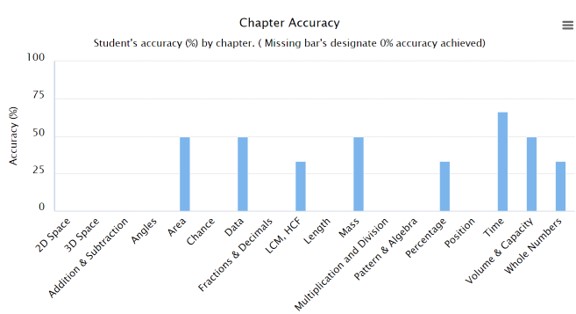
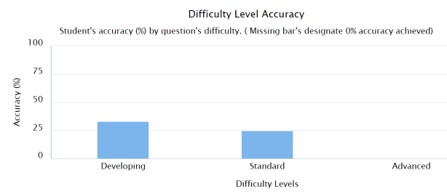
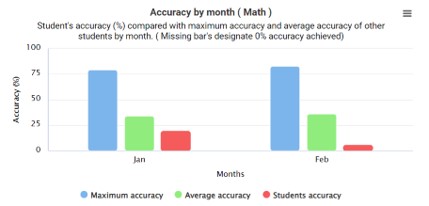
Each question’s difficulty level (Developing, Standard and Advanced), chapters (Area, Volume, LCM/HCF etc.) and solutions are provided at the completion of a test. Detailed result analysis in the form of easy-to-understand graphs makes it easier to prepare perfectly for the Selective Test.


The article ‘How to Prepare for Thinking Skills in Selective Test?’ provides detailed on the Thinking Skills preparation.
Navigating the journey towards the Selective High School Placement Test might seem like a daunting task. Still, trust me, taking a holistic approach to your preparation can make a world of difference. So, what exactly does ‘holistic’ mean in this context? Think of it this way: it’s like preparing for a marathon, not just by running every day but also by eating right, resting well, and keeping your mind sharp. Yes, you’re prepping for an academic test, but there’s more to it than just hitting the books!
Mind, Body, and Books: The Three Pillars of Success
Imagine you’re building a house. You wouldn’t just focus on the walls, right? You’d ensure the foundation is solid, the roof is sturdy, and everything in between works harmoniously. Similarly, when prepping for the Selective High School Placement Test, it’s essential to consider three pillars: your mind, body, and, of course, the study materials.
Firstly, your mind is your most potent tool. Keeping it sharp means adopting strategies like regular breaks, meditation, or even engaging in activities that relax you. A stressed mind won’t retain information effectively. Next up, your body. Believe it or not, physical activity plays a significant role. So, ensure you’re getting enough sleep, eating nutritious meals, and incorporating some physical activity. Finally, the books or study materials. While they’re crucial, remember not to overload yourself. Quality over quantity always!
Beyond the Books: Real-world Applications and Scenarios
Now, let’s delve a bit deeper into why a well-rounded approach matters. Think of it this way: the Selective High School Placement Test isn’t just about regurgitating facts. It’s about understanding concepts, applying knowledge, and problem-solving. So, how can you hone these skills? Simple! Engage in activities that challenge you outside the typical study routine.
For instance, join discussion groups where you can talk on topics related to the NSW Selective High School Placement Test. This not only enhances your understanding but also boosts your confidence.
Embracing Flexibility: Adapting and Evolving Your Strategy
Last but certainly not least, flexibility is key. While it’s essential to have a structured plan for the Selective High School Placement Test, remember that flexibility allows for growth and adaptation. You might discover new study techniques that work better for you or realize that certain topics require more attention than others. And that’s okay!
Instead of sticking rigidly to a plan, be open to tweaking it based on your progress and needs. Perhaps, you find that group study sessions are more beneficial than solo sessions. Or maybe, you realize that incorporating visual aids like diagrams or mind maps aids retention. Embrace these discoveries, adapt your strategy, and remember, it’s all part of the learning journey.
Preparing for the Selective High School Placement Test is undoubtedly a significant undertaking. However, by adopting a holistic approach that considers your mind, body, real-world applications, and flexibility, you’re setting yourself up for success. Remember, it’s not just about acing the test but also developing skills, knowledge, and habits that will serve you well in the future. So, take a deep breath, trust the process, and embrace holistic preparation. You’ve got this!
Subject Mastery: Discussing strategies for mastering key subjects, topics, and areas of the test.
Alright, future high school rockstars, let’s chat about something super crucial: mastering those key subjects for the Selective High School Placement Test. I know, I know, it might sound a tad intimidating, but fear not! With the right strategies and a sprinkle of dedication, you’ll be cruising through those subjects like a pro in no time. Ready to dive in? Let’s get started!
Know the Subjects, Your Strengths and Weaknesses
It is important to take a moment to assess your strengths and weaknesses before diving into your study materials. Begin by identifying the subjects or topics that you will be tested on and evaluate your understanding of them. This strategy will help you to be more efficient with your studying. Take note of the subjects or topics that you are already comfortable with and the areas that may require more attention. Remember, this is not about playing favorites, it is about being strategic and using your time wisely.
The NSW Selective High School Placement test consists of 4 subjects- Reading, Mathematical Reasoning, Thinking Skills and Writing. Create your list of topics on these subjects and create a game plan. Perhaps start with the topics you’re less confident about, allocating more time and resources to mastering them. Simultaneously, ensure you’re dedicating ample study time to your strengths, refining your knowledge and skills further. Remember, the goal is to achieve a balanced understanding across Math, Reading, Thinking Skills and Writing, ensuring you’re well-prepared for the Selective High School Placement Test.
Dive Deep: Exploring Topics, Concepts, and Applications
Now that you’ve identified your focus areas, it’s time to dive deep! And I mean really deep. Start by breaking down each subject into manageable topics or concepts. Instead of skimming the surface, delve into the intricacies, applications, and real-world implications of each topic where possible.
For instance, if you’re tackling mathematics, don’t just memorize a given formula. Understand the fundamentals, its origin, and applications. Solve a variety of problems, explore different methodologies, and challenge yourself with complex scenarios. Similarly, for Reading, focus on comprehension, analysis, and critical thinking. Engage with diverse resources, practice questions, and explore various perspectives. Read on various topics, read every day consistently, write down the unknown words or phrases, find the meaning and apply them in different sentences. By exploring topics comprehensively, you’re not just preparing for the Selective High School Placement Test; you’re fostering a deeper, more meaningful understanding.
Practice Makes Perfect: Embracing Consistent, Targeted Revision
Last but certainly not least, practice makes perfect! And no, I’m not talking about mindless repetition. I’m referring to consistent, targeted revision that reinforces your subject mastery. Allocate time each week to revisit topics, review concepts, and tackle practice questions.
Create a revision schedule that incorporates all subjects, ensuring you’re dedicating equal attention to each. Perhaps start with a broad overview, gradually narrowing down to specific topics, concepts, and areas of focus. Utilize practice tests, mock exams, and sample questions to assess your understanding, identify areas for improvement, and refine your strategies accordingly.
Mastering key subjects for the Selective High School Placement Test is undoubtedly a journey. However, by strategically selecting subjects, diving deep into topics, concepts, and applications, and embracing consistent, targeted revision, you’re setting yourself up for success. Remember, it’s not just about acing the test; it’s about fostering a lifelong love for learning, exploring diverse subjects, and embracing new challenges. So, roll up those sleeves, embrace the journey, and let’s conquer those subjects together! You’ve got this!

Selective Test in NSW is a very challenging test as we already know. In my article ‘Insights of Selective Schools Tests’ I mentioned that the curriculum and the past exam papers should be the starting point. In this article, I will discuss the details of NSW Selective Test Thinking Skills preparation.
Selective School Test in NSW is very challenging, as we already know. In my article Insights of Selective Schools Tests I mentioned that the curriculum and the past exam papers should be the basis of preparation. In this article, I will discuss the details of Thinking Skills.
Before proceeding to a detailed analysis of Thinking Skills, I feel compelled to present the following relevant resources:
Try free Selective tests HERE
Download past papers from HERE
Be our Facebook group member to receive valuable resources and information HERE
Get worksheets on many different topics from NeoTeriC Academy BookStore
In 2021, the Selective School Test underwent a change, replacing the General Ability Test with Thinking Skills. In contrast to Mathematical Reasoning, Thinking Skills are not included in the Stage 3 curriculum. Consequently, the foundation for Thinking Skills preparation rests upon past Selective School Test papers dating back to 2021 and the practice test available on the website www.education.nsw.gov.au.
The Thinking Skills test comprises 40 questions to be completed within a 40-minute time limit.
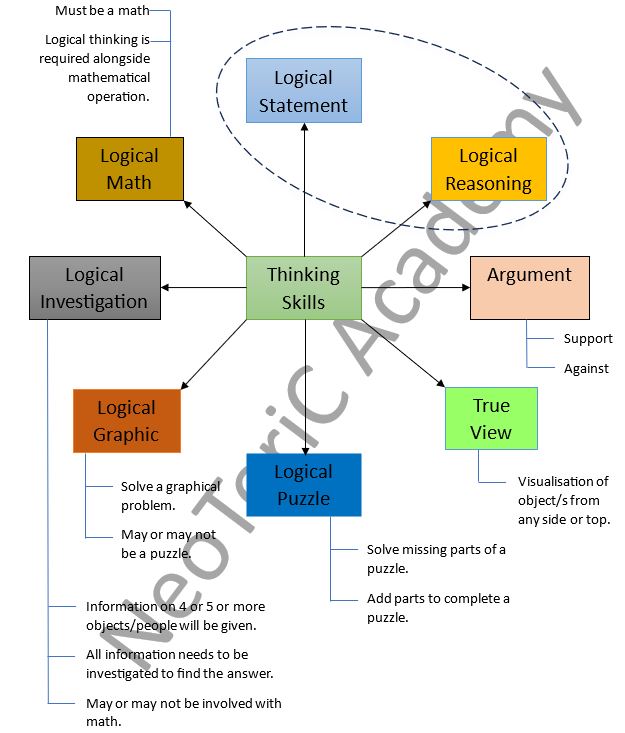
By analysing past Selective School Test papers, we can observe there are 8 different topics in Thinking Skills unless the NSW Department of Education add or modify any topics.

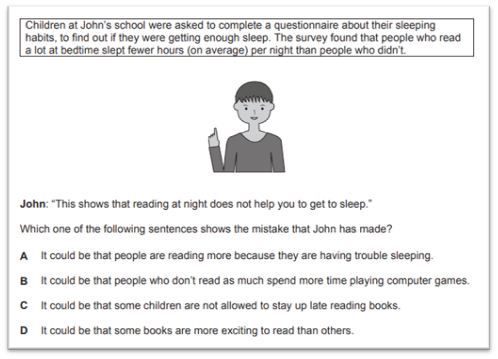
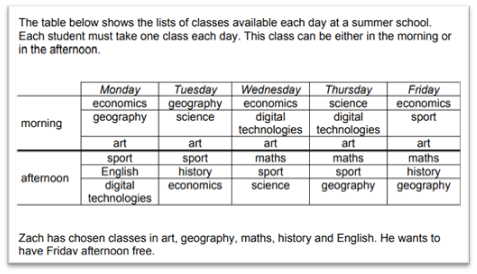
The question consists of a principal statement. Interrogations are subsequently posed concerning an alternative statement stemming from the principal assertion. In order to arrive at the correct subsidiary statement, students must first grasp the principal assertion. It is crucial to keep in mind that the main statement forms the underlying premise, regardless of any incorrect details mentioned. The following image is an example of a Logical Statement of the Selective School Test.

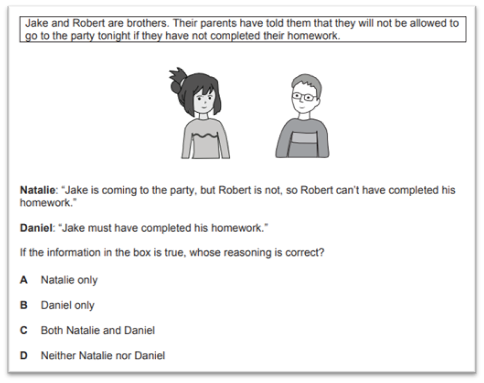
Logical Reasoning is very similar to the Logical Statement. The reason behind an action, inaction or any kind of result needs to be found in the main statement.
Students can prepare on mathematics for the Selective Test in the following steps:

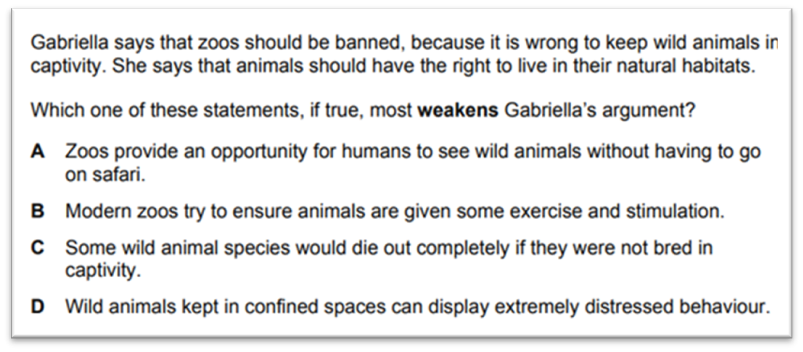
The question consists of one or more statements. Students must determine what is being supported or opposed by the main statement. In the Selective Test, the questions ask which statement strengthens (supports) or weakens (against) the main statement.

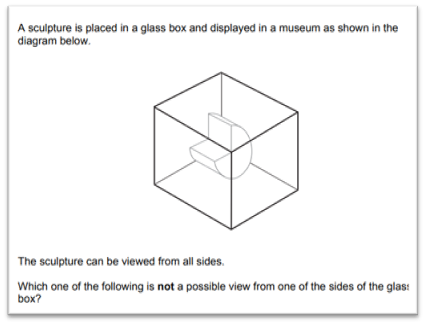
This is about objects view from any side, top or bottom. It tests student’s visualisation ability.

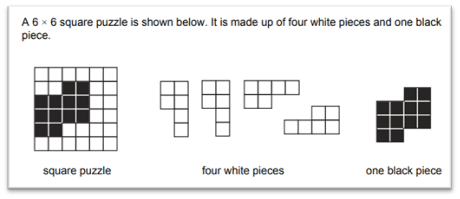
This question asks to solve a puzzle problem. Students need to have a good understanding on geometric shape and size to solve this type problem in Selective Test. Usually, only a few questions are included in this category.

This is a graphical question that involves logic, visualisation, and maths together.

This is an investigative type problem. Typically, a scenario is provided that includes several people, things, attributes, activities or events. Questions are then asked to identify a specific person or thing from the given options. This category is one of the most time-consuming problems among all the categories. Thus, leaving this category question to answer at the end may be a good idea for some students.

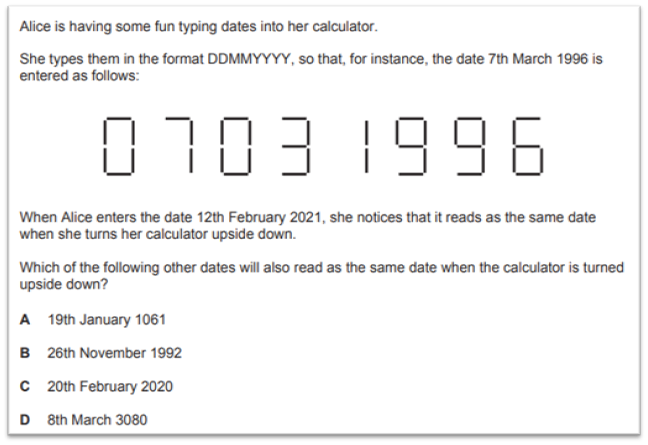
The main difference between this logical math and mathematical reasoning is that the former requires logical calculations in addition to mathematical operations.

The topics discussed above measure an individual’s capabilities in various dimensions. Therefore, it is crucial for students to identify their weaknesses, practice more in those areas, and improve.
Students can prepare on Thinking Skills for the Selective School Test in the following steps:
You may want to get valuable information from our other articles in NeoTeriC Academy BLOG.
Introduction
Selective schools in Australia are government-funded institutions that offer academically focused education for high-performing students. Admission to these schools is determined through competitive entrance exams, known as the Selective Schools Tests. Understanding the structure, purpose, and preparation strategies for these exams is essential for parents and students aiming to secure admission.
Selective schools aim to provide an advanced learning environment for gifted students. They promote academic excellence, critical thinking, and leadership skills. Entry is based solely on merit, ensuring equal opportunity for students from different backgrounds.
The test evaluates key academic areas rather than rote memorization. It generally includes:
The content is designed to test reasoning and creativity rather than school-specific curricula.
The Selective High School Placement Test is usually held annually in March or April, depending on the state.
Applications open months earlier through the respective education department websites (e.g., NSW Department of Education).
The exam is conducted under strict supervision, and results are later scaled to maintain fairness across all test takers.
Selective schools operate in:
Final placement is based on a combination of:
Cut-off scores vary yearly depending on competition and available seats.
Selective Schools Tests are a gateway to advanced academic environments that nurture future leaders and innovators. Preparation should focus on understanding the test’s analytical nature rather than memorization. With consistent effort, time management, and the right mindset, students can enhance their chances of securing a place in Australia’s most competitive public schools.
Open Tests
Bookstore
Selective Test
Opportunity Class
NAPLAN
aiWriting Assessor
Open Tests
Bookstore
Selective Test
NAPLAN
aiWriting Assessor
Browse Courses
Open Tests
Bookstore
Selective Test
Buy our online test courses, start practicing today and develop full understanding and confidence day by day